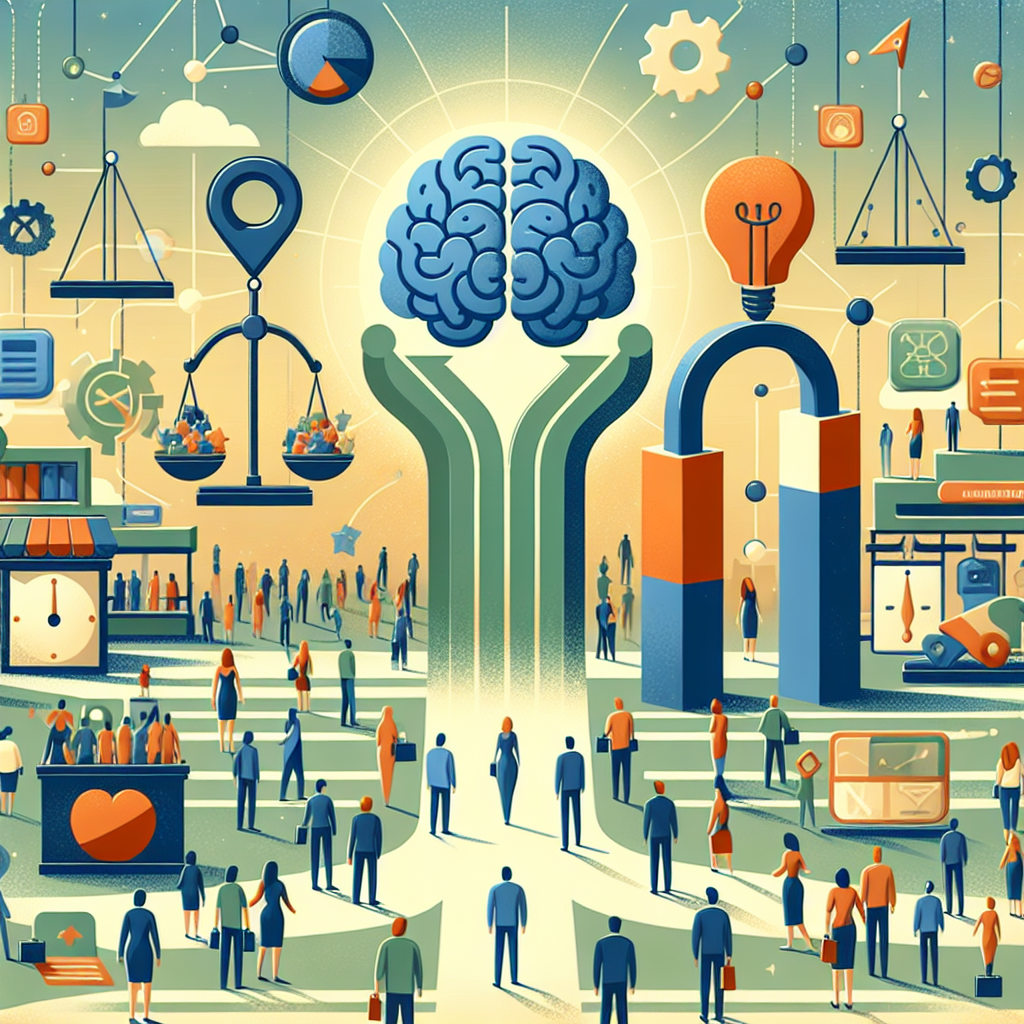
How to Use Behavioral Economics in Marketing
Welcome to the fascinating world of behavioral economics! If you’re a marketer looking to enhance your strategies and connect with your audience on a deeper level, you’re in the right place. Behavioral economics combines insights from psychology with economic theory to understand how people make decisions. In this blog post, we’ll explore how you can leverage these principles to boost your marketing efforts. 📈
Table of Contents
- Introduction to Behavioral Economics
- Anchoring Effect
- Leveraging Social Proof
- The Scarcity Principle
- Understanding Loss Aversion
- Conclusion
- FAQs
Introduction to Behavioral Economics
Behavioral economics is the study of how psychological factors influence economic decision-making. Unlike traditional economics, which assumes people are perfectly rational, behavioral economics acknowledges that humans are often irrational and influenced by biases. This understanding opens up a treasure trove of opportunities for marketers. By tapping into these human tendencies, you can craft marketing messages that resonate better with your audience.
Anchoring Effect
Ever noticed how the first piece of information you receive about something heavily influences subsequent judgments? This is known as the anchoring effect, and it’s a powerful tool in marketing. 🧲
For instance, when setting the price of a product, displaying the original price alongside the discounted price can make the deal seem more attractive. Customers anchor on the higher original price, making the discount appear more significant. To implement this, try showcasing a higher reference price on your website or in your advertising to create a perception of value.

Leveraging Social Proof
Humans are social animals, and we often look to others for cues on how to behave. This phenomenon, known as social proof, can significantly impact consumer behavior. 🤝
To harness social proof in your marketing, consider incorporating customer reviews, testimonials, and user-generated content into your campaigns. When potential customers see that others have had positive experiences with your product or service, they’re more likely to make a purchase themselves. Highlighting the number of satisfied customers or showcasing influencers using your products can also be incredibly persuasive.
The Scarcity Principle
People tend to place a higher value on things that are perceived as scarce. By creating a sense of urgency or exclusivity, you can drive action from your audience. ⏳
Incorporate scarcity into your marketing by using phrases like “limited time offer” or “only a few items left.” Flash sales, exclusive memberships, and countdown timers can also create a sense of urgency that prompts immediate action. Just be sure to use this tactic ethically and truthfully to maintain trust with your audience.
Understanding Loss Aversion
Loss aversion is the concept that people prefer to avoid losses rather than acquire equivalent gains. In simple terms, losing something is more painful than gaining something of the same value is pleasurable. ⚖️
To apply loss aversion in marketing, emphasize what customers stand to lose if they don’t take action. This could be missing out on a sale, an exclusive offer, or even the chance to improve their life with your product. A well-crafted message that highlights potential losses can be incredibly motivating for customers who are on the fence about a decision.
Conclusion
Behavioral economics offers a wealth of insights that can transform your marketing strategies. By understanding and applying concepts like anchoring, social proof, scarcity, and loss aversion, you can craft messages that resonate deeply with your audience and drive action. Remember, the key is to understand your audience’s behavior and tailor your approach accordingly.
So, why not give these strategies a try and see how they can boost your marketing efforts? After all, understanding human behavior is at the heart of successful marketing. 💡
FAQs
Q: What is behavioral economics?
A: Behavioral economics is the study of how psychological factors influence economic decision-making, focusing on how people are often irrational in their choices.
Q: How can I use the anchoring effect in marketing?
A: You can use the anchoring effect by displaying a higher reference price alongside a discounted price to create a perception of value.
Q: What is an example of social proof?
A: Social proof can be demonstrated through customer reviews, testimonials, and showcasing the number of satisfied users or influencers using your product.
Q: How does scarcity drive consumer behavior?
A: Scarcity creates a sense of urgency or exclusivity, prompting consumers to act quickly to avoid missing out on a valuable opportunity.
Q: What is loss aversion, and why is it important in marketing?
A: Loss aversion is the tendency for people to prefer avoiding losses over acquiring equivalent gains. It is important in marketing because highlighting potential losses can motivate consumer action.