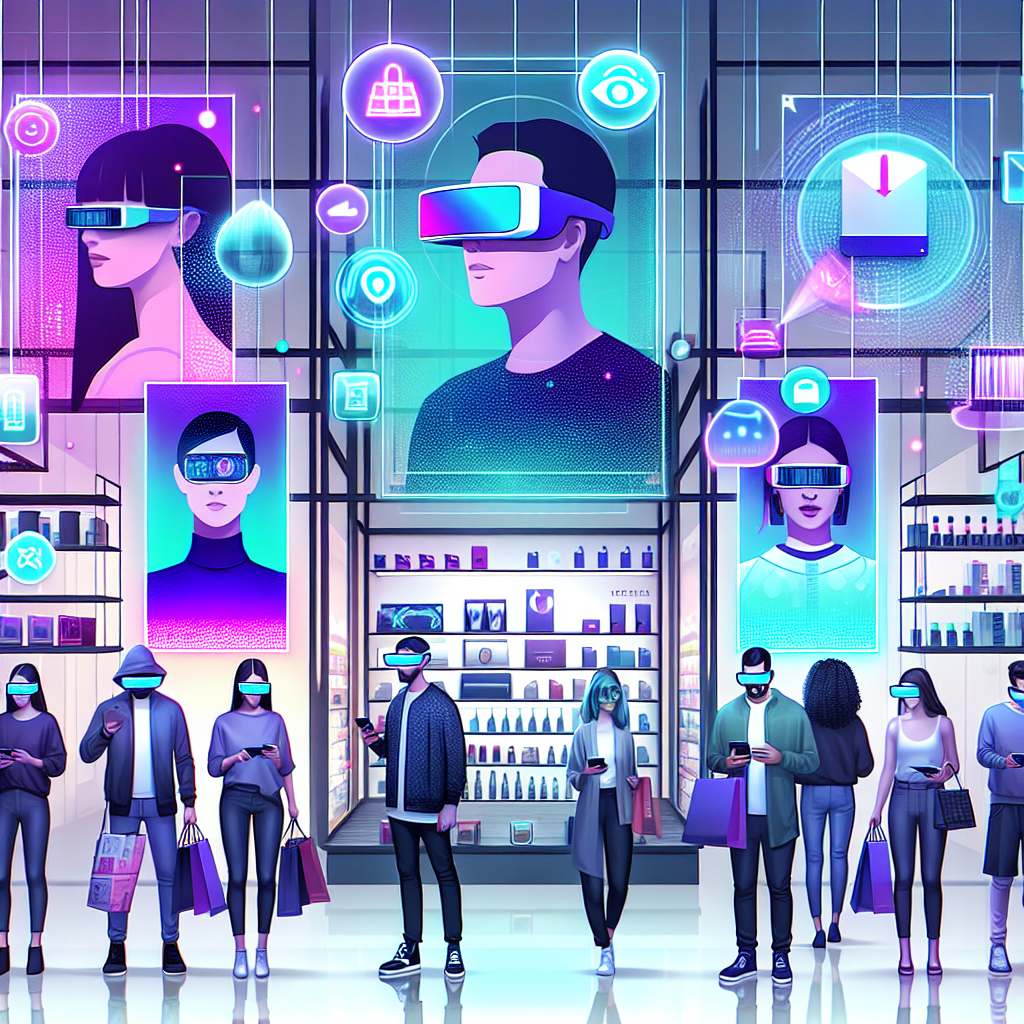
The Role of Augmented Reality in Enhancing Customer Interaction
In today’s fast-paced digital world, businesses are continuously seeking innovative ways to engage with their customers. One such groundbreaking technology that has revolutionized customer interaction is Augmented Reality (AR). By seamlessly blending the digital and physical worlds, AR offers an immersive experience that enhances the way customers interact with brands. Let’s dive into the fascinating world of AR and explore how it’s transforming customer engagement. 🌟
Table of Contents
1. Introduction to Augmented Reality
2. How AR is Changing Customer Interaction
3. Benefits of AR in Customer Engagement
4. Real-World Examples of AR in Action
5. Challenges and Considerations
6. The Future of AR in Customer Interaction
7. Conclusion
8. FAQs
Introduction to Augmented Reality
Augmented Reality is a technology that overlays digital information—such as images, sounds, and other data—onto the real world. Unlike virtual reality, which creates a completely artificial environment, AR enhances the real world by adding layers of digital content. This technology has found its way into various industries, from gaming and entertainment to retail and healthcare. But how exactly is AR changing the way businesses interact with their customers? 🤔
How AR is Changing Customer Interaction
AR is reshaping customer interaction by providing visually rich experiences that are both engaging and informative. By allowing customers to visualize products in real-time and in their real environment, AR bridges the gap between online and offline shopping experiences. Here are a few ways AR is making a difference:
Interactive Product Demonstrations
With AR, customers can interact with a 3D model of a product, viewing it from every angle before making a purchase. This interactive experience not only builds customer confidence but also reduces the likelihood of returns.
Personalized Shopping Experiences
Imagine trying on clothes or makeup without ever leaving your home. AR makes this possible by offering virtual try-ons. This personalized experience keeps customers engaged and more likely to make a purchase.
Enhanced Customer Support
AR can also be used for providing visual instructions and support. For example, customers can use their smartphones to see step-by-step installation guides overlaid on the actual product, making troubleshooting a breeze.
Benefits of AR in Customer Engagement
The use of AR in customer interaction brings a plethora of benefits that businesses cannot afford to ignore:
Increased Engagement
AR experiences are inherently engaging. By providing an interactive and immersive experience, customers are more likely to spend time with the brand, leading to higher engagement rates.
Improved Customer Satisfaction
By offering customers a better understanding of products through AR, businesses can enhance customer satisfaction and loyalty. When customers know exactly what they’re purchasing, they’re happier with their decisions.
Brand Differentiation
In a crowded marketplace, standing out is crucial. AR provides a unique and cutting-edge way for brands to differentiate themselves from competitors, attracting tech-savvy customers looking for innovation.
Real-World Examples of AR in Action
Many leading companies are already leveraging AR to enhance customer interaction. Let’s take a look at a few real-world examples:
IKEA Place
IKEA’s AR app allows customers to virtually place furniture in their homes to see how it fits and looks before making a purchase. This not only enhances the shopping experience but also reduces the risk of returns.
L’Oréal’s Virtual Try-On
L’Oréal’s app enables customers to try on makeup virtually, offering a personalized and convenient shopping experience. This innovation has significantly increased customer engagement and sales.
Challenges and Considerations
While AR offers exciting opportunities, it’s not without its challenges:
Technical Limitations
Developing AR experiences requires significant technical expertise and resources. Ensuring that these experiences are smooth and free of glitches is crucial for maintaining customer trust.
Privacy Concerns
As AR collects data to personalize experiences, concerns about privacy and data security arise. Businesses must be transparent about data usage and take steps to protect customer information.
The Future of AR in Customer Interaction
The future of AR in customer interaction looks promising. As technology continues to evolve, we can expect even more sophisticated AR experiences that further blur the lines between the digital and physical worlds. From virtual showrooms to AR-enhanced customer service, the possibilities are endless. 🚀
Conclusion
Augmented Reality is transforming the way businesses engage with their customers by offering immersive and interactive experiences. While there are challenges to overcome, the benefits of AR in enhancing customer interaction are undeniable. As AR technology continues to advance, its role in customer engagement is set to become even more significant. Businesses that embrace AR today are likely to be the leaders of tomorrow. 🌟
FAQs
Q: What is Augmented Reality?
A: Augmented Reality (AR) is a technology that overlays digital content onto the real world, providing an enhanced view of the physical environment.
Q: How does AR improve customer interaction?
A: AR improves customer interaction by offering immersive experiences such as virtual try-ons, interactive product demonstrations, and enhanced customer support.
Q: Are there any challenges associated with using AR?
A: Yes, challenges include technical limitations and privacy concerns. Businesses must ensure seamless experiences and protect customer data.
Q: What are some real-world examples of AR in use?
A: Examples include IKEA’s AR app for furniture visualization and L’Oréal’s virtual try-on app for makeup.
Q: What is the future of AR in customer interaction?
A: The future of AR in customer interaction is bright, with more sophisticated experiences expected to emerge as technology advances.